
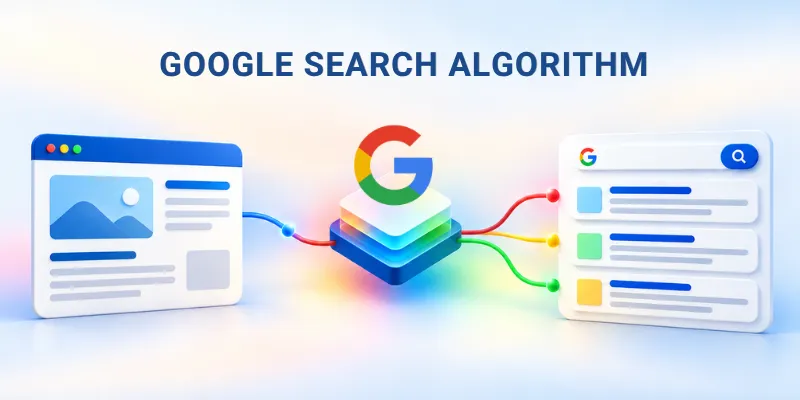
Type a question into the search bar and, within a fraction of a second, Google sorts through billions of web pages to hand you a ranked list of answers. That entire process runs on the Google search algorithm, a constantly evolving ranking system built from hundreds of smaller algorithms working together to decide what deserves the top of search results.
If you have ever wondered how Google search works behind the scenes, or why your rankings shift after an update with no warning, this guide breaks it down in plain language for beginners, bloggers, and small business owners alike.
What Is the Google Search Algorithm?
The Google search algorithm is not one single formula. It is a massive collection of algorithms and ranking systems that work together to interpret a search query, scan the google index, and return the most relevant results possible in milliseconds.
Each of these smaller search algorithms specializes in something different. Some focus on matching keywords to search queries, others evaluate site speed, and others assess whether search results are trustworthy enough to show real search users. Together, they form what most people simply call Google’s ranking algorithm.
Understanding how the google search algorithm work happens is less about memorizing a formula and more about understanding the goal behind it: connect people with the most relevant results for whatever they typed into the search bar.
How Does the Google Search Algorithm Work?
Every search follows a similar path from query to ranking, even though the process happens almost instantly.
Crawling and Indexing
Before any ranking can happen, Google needs to discover and store a web page in its search index. Googlebot crawls the web continuously, following links from page to page, and stores what it finds in the massive database known as the google index. A page that is not indexed simply cannot appear in google search results, no matter how well it is written.
Matching Search Queries
When someone types a search term into the box, Google analyzes the query to understand intent, not just the literal words used. This is why searching “best running shoes” and “top running shoes” tends to surface a nearly identical search engine results page, since the underlying intent behind both search queries is the same.
Ranking Results
Once relevant pages are identified, Google’s ranking systems are designed to score and order them using hundreds of signals. This is where things like pagerank works alongside content quality, site speed, and mobile-friendliness to decide the final order shown in search results.
Key Factors That Influence Google Search Rankings
While Google keeps its exact ranking algorithm private, years of testing, official statements, and the Google search central blog have confirmed several major ranking factors that consistently move the needle.
Content Quality and Relevance
Content that directly answers a search term, written clearly and backed by real expertise, tends to outperform thin or generic pages. Google’s helpful content update reinforced this directly, rewarding pages built for people over pages built purely to rank.
Backlinks and Authority
Links from other trusted sites still act as a vote of confidence, helping Google gauge which websites in search results deserve more visibility. Quality matters far more than quantity here.
Page Experience and Technical Health
Site speed, mobile usability, and secure connections all factor into how Google search ranking decisions get made. A slow or broken page can undercut even genuinely excellent content.
Search Intent Match
Google increasingly rewards pages that match the specific intent behind a search term, whether someone wants to learn, compare, or buy. Misjudging intent is one of the fastest ways to see a drop in search traffic despite otherwise solid content.
How Google Algorithm Updates Affect SEO
Google algorithm updates happen constantly, but the ones that reshape rankings noticeably tend to fall into a few recognizable categories.
Core Algorithm Updates
A core update is a broad adjustment to Google’s overall ranking system, rather than a fix targeting one narrow issue. The March 2024 core update was one of the most significant in recent history, specifically designed to reduce low-quality, unoriginal content across google search results. The November 2024 core update followed just months later, continuing the same push toward surfacing genuinely useful content over material built to game the rankings.
Helpful Content and Product Review Updates
The September 2023 helpful content update rolled the helpful content system directly into Google’s core ranking process, rather than treating it as a separate classifier. Alongside this, several product review updates have specifically targeted thin affiliate content, rewarding reviews written from genuine hands-on testing instead of recycled specs.
Spam Updates
Spam updates work differently from core updates. Rather than reassessing content quality broadly, they target sites that manipulate search through tactics like cloaking, link schemes, or scraped content. The March 2026 spam update and the August 2026 spam update both continued this enforcement pattern, specifically demoting sites violating Google’s spam policies without touching the broader quality-based ranking system.
Why the History Matters
Looking at the history of Google algorithm updates makes one pattern clear: Google consistently favors original, helpful, user-first content over material designed purely to manipulate search. Chasing loopholes tends to work only until the next algorithm update closes them.
How to Create Content That Aligns With Google Search
You cannot control Google’s ranking algorithm directly, but you can build content that naturally satisfies what it is designed to reward.
Start by researching the actual search term your audience uses, then write content that fully answers the intent behind it rather than skimming the surface. Improve search experience with fast-loading, mobile-friendly pages, since technical friction undercuts even strong writing.
Back up claims with genuine expertise or first-hand experience wherever possible, since this is exactly what recent product review updates and the helpful content update have rewarded. Avoid publishing purely for the sake of creating new content; every page should serve a real reader, not just a keyword.
Finally, keep an eye on Google search central for official updates, and check your search history data in Search Console after any major algorithm update to see how your specific pages responded.
Conclusion
The Google search algorithm will keep evolving, but its underlying goal has stayed remarkably consistent: match real search queries with the most genuinely useful web page available. Understanding how core updates, spam updates, and everyday ranking factors work together gives you a much clearer target to write toward.
Focus on creating helpful, original content, keep your technical foundation solid, and treat every algorithm update as a nudge back toward serving real readers rather than gaming a system. Do that consistently, and your rankings tend to take care of themselves over time.
Frequently Asked Questions
1. How often does Google update its search algorithm?
Google makes small adjustments to its algorithms nearly every day, but it only announces major core updates and spam updates a handful of times per year through its search status dashboard and Google search central blog.
2. What is the difference between a core update and a spam update?
A core update broadly reassesses content quality and relevance across search engine results, while a spam update specifically targets sites violating spam policies, like cloaking or link schemes, without changing the general quality-based ranking system.
3. Why did my website traffic drop after a Google algorithm update?
A drop in search traffic after a core update usually reflects a broad reassessment of content quality rather than a targeted penalty. Google has stated there is no specific fix, but improving content depth, accuracy, and user experience tends to help over subsequent updates.
4. What are the most important Google search ranking factors today?
Content quality and search intent match remain the top ranking factors, followed closely by backlink authority, page experience, mobile usability, and overall site speed.
5. Can I recover my rankings after a helpful content update?
Yes, though recovery usually happens gradually as Google reassesses your site during future updates rather than immediately. Focus on removing thin or unoriginal pages and strengthening the depth and usefulness of your existing content.